

Σαντορίνη / Το Φρούριο του Σκάρου


Tο αρχικό κάστρο, ήταν γνωστό και ως «Επάνω Κάστρο» ή «La Roka» και χτίστηκε κατά τα Βυζαντινά χρόνια από το ενετό Giacomo Barozzi.
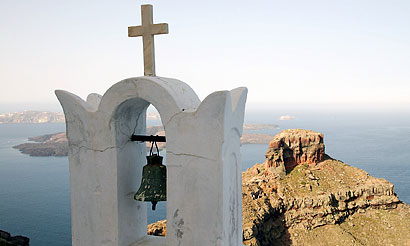
Ένας ολόκληρος οικισμός χτίστηκε γύρω και κάτω από το Επάνω Κάστρο, το «Καστέλι» του Σκάρου. Ο οικισμός ήταν πυκνοκατοικημένος και είχε 200 σπίτια. Γιά να φτάσει κάποιος τους τοίχους του σκάρου με τα πόδια χρειαζόταν τουλάχιστον μισή ώρα. Στην κορυφή του βράχου κρέμασαν μία μεγάλη καμπάνα, για να προειδοποιούν τους κατοίκους σε περίπωση επικείμενης πειρατικής επιδρομής.
Το βράχος του Σκάρου είχε κλονιστεί επανειλημμένα από ισχυρούς σεισμούς. Ιστορικές πηγές αναφέρουν ότι οι σεισμοί κατά τις εκρήξεις του 1650, 1701-1711 και 1866-1870 προκάλεσαν σημαντικές ζημιές. Οι ενετοί ευγενείς που ζούσαν εκεί το εγκατέλειψαν μετά τις εκρήξεις 1707-1711.
Ο Σκάρος ήταν η πρωτεύουσα της Σαντορίνης μέχρι τον 18ο αιώνα, αν και η εκκένωση του Σκάρου είχε ξεκινήσει στις αρχές του 17ου αιώνα. Οι πλούσιοι Ρωμαιοκαθολικοί πού ζούσαν εκεί άρχισαν να μετακινούνται προς την πόλη των Φηρών, εγκαταλείποντας το κάστρο πρός χαμηλότερα επίπεδα για να έχουν ευκολότερη προσβαση προς τη θάλασσα.
Σύμφωνα με σκίτσα και τις αναφορες του κόμη Choiseul-Gouffier, ο οποίος επισκέφθηκε τη Σαντορίνη το 1770, υπήρχαν ακόμη τα σπίτια του Σκάρου εκείνη την εποχή. Οταν όμως ο αρχαιολόγος Ludwig Ross επισκέφθηκε τη Σαντορίνη το 1836, ο Σκάρος ήταν τελείως άδειος.
Ο βράχος του Σκάρου σήμερα είναι εντελώς ακατοίκητος. Υπάρχει μία μικρη εκκλησία με εξαιρετική θέα στη βόρειοδυτική πλευρά του και λίγα ερείπια που άφησαν παλαιές κατοικίες.